

this is relaxed...
what body dysmorphia taught me about voice + other writerly things
Hi-Hi,
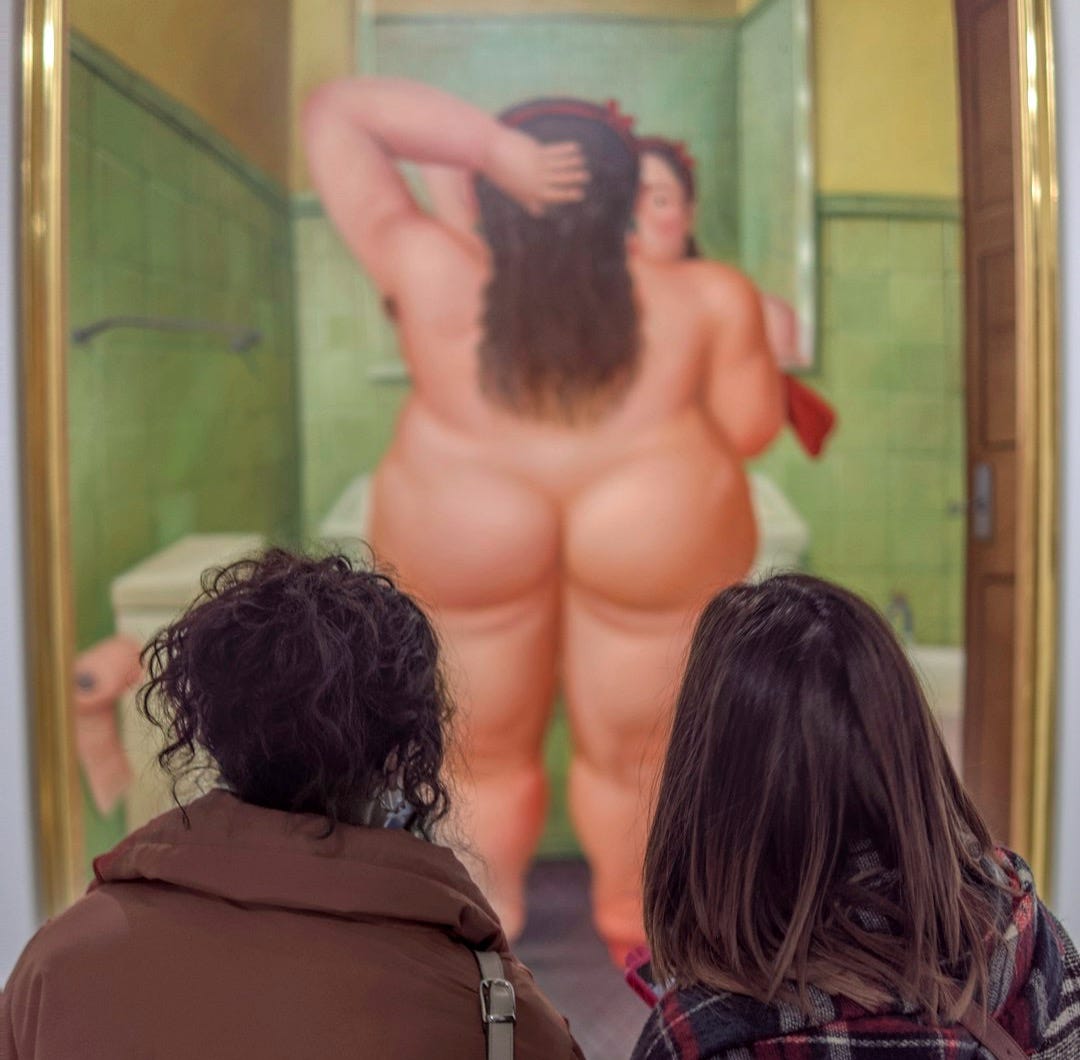
When I was a small girl, my mother used to stand sideways in front of the mirror in her bra and underwear.
“This is relaxed,” she’d announce, letting go of her tummy.
“And this is held in.” She’d suck tight her abdominal muscles, flattening her stomach.
“This is relaxed.” And there she’d be in the mirror, belly pooched out like Winnie-the-Pooh.
“And this is held in,” she’d squeak as if it took colossal effort to make her already small stomach convex.
In and out, again and again. It was a game. I remember giggling. I remember learning which was better — held in, obviously.
Okay, yes, ugh… what a horrible message to give a little girl. (What a struggle to unlearn!) And what a horrible burden for my mother—misogyny, body dysmorphia, exacting and unmeetable standards. We swim in it.
…
I was thinking about voice and what a slippery notion it has always seemed to me. What is it? How do you have one? Should you work hard to create yours? At my MFA program voice was treated with the same amount of reverence as the amount of disdain we attached to plot. (What a lesson to unlearn!) Voice was everything.
“I don’t have one!” I lamented.
“Yes you do,” my teacher told me. “Use the one with which you talk to yourself inside your head.”
“That voice is such a scold!” I told her.
…
Enter, Elizabeth McCracken and her wonderful book on writing, THE LONG GAME, Notes on Writing Fiction, which I absolutely encourage you to read ASAP.
Here’s what she has to say about voice:
Your voice is merely the idiosyncratic linguistic habits, good and bad, that give you pleasure. Your own little indulgences, the way you form your thoughts, whether you like to repeat words or let your sentences go long or are careless, inconsistent with your commas. Voice comes with an open ear and an open mind. It rises up from the page.
In other words, voice is your personal language. It’s not about the content, as I’d mistaken with my teacher’s advice, it’s about the way you speak. I love the phrases, “that give you pleasure,” and “your own little indulgences.” It seems kind and respectful to ourselves. Appreciative even!
When we try to make our personal language conform to “Good Style” we eliminate our voice. This is not to say, McCracken continues, that we are allowed to be sloppy. Don’t let anyone break your voice, your style, but do be rigorous in writing good sentences. For example, I had a brief (and embarrassing) love affair with the word ‘wee’ until an editor wrote in the margin, “and I went wee, wee, wee, all the way home.”
…
The moral? Relax. Be you. But be the clearest and best you. Don’t hold it in like my mother in front of her mirror, her voice so small and tight. Be Sophia Bush who said:
Life is too short and I'm Italian. I'd rather eat pasta and drink wine than be a size zero.
Embrace your voice. Embrace your body.
This is relaxed.
…
Oh, Mom. How I wish you’d never learned about holding it in. How I wish you’d never taught me.

write:
As I mentioned above, I’m in love with Elizabeth McCracken’s THE LONG GAME. EM, in case you don’t know, is one of the best. I’ve read nearly everything she’s published. I’m particularly a fan of these three books which I suggest you read post haste:
When I cracked open THE LONG GAME, I hoped to have some magic rub off on me. And maybe some has… I’ve certainly filled my reading notebook with EM aphorisms. At the start she tells us she’s not giving us a piggyback ride. Yes, she’s chockablock filled with opinions, yet her goal as a teacher, “to provoke my students into thinking the most interesting thoughts that they can, so they can teach themselves how to write.”
Here’s just a few of her interesting thoughts which I hope to absorb into my writer DNA:
If you’re writing a book, I tell my students, you better make it a book of your heart.
In fiction there are needful mysteries and needless mysteries.
Some people wait to start a novel until they feel confident enough, but you have to be a little panicked to make it across the ocean in a rowboat.
Fiction gives us the ability to know strangers, multiple and singular, from the inside and the outside, to feel the vibrating border between the out and in. That is its particular power above all other forms.
To do anything, and enjoy it and improve, you have to have the stomach—the heart—for failure. This is painful. I am awful at it. A flop. Better not quit.
Even if you have no intention of writing a word, you will benefit from reading this book. You will benefit from moving through the world with artistic sensibility. EM teaches us to be curious and to be ourselves.
Opportunities to engage in the r.w.e. community:
Mentor Book Group— in which we read memoirs, personal growth books, fiction and discuss what we might like to adopt in our own “work-in-progress” lives. THE OTHER SIDE OF CHANGE, by Maya Shankar will be our July book, meeting on 26 July at 9a pacific time. Love to have you join us.
If you’d like to discuss books with me and a group of smart and lively readers, the r.w.e. book group selection for July is THE THINGS WE NEVER SAY, by Elizabeth Strout. We will meet Sunday, 12 July, also at 9a pacific time on zoom. Want to join in?
The book groups are a perk for paid subscribers. I’d love to get to know you better:
Thank you in advance for sharing your love!

write again (plus life advice):
I recently took an online course from Adam Gopnick over at Five Things I’ve Learned. His course on Writing Memoir, was a delight. He’s an agile chatter, the kind of person you could safely put in the middle of the table at a dinner party and count on him to keep the conversation lively. He knows how to middle!
The biggest takeaway I want to share with you? As a writer of memoir you must be an egoist and not a narcissist. What does that mean?
An egoist writes a memoir. Anyone who sets out to tell their story is an egoist. You must be. You’re writing about the development of your soul. You’re writing your inner life. You write with audacity and daring. The thing is, as an egoist writing a memoir you must elevate the register from a confession about you to a universal truth. As go I, so go all of us. You must connect the “I” to a larger theme.
I was here. I felt this. Maybe you have felt this too.
Maybe my story reveals something about being human. Maybe my story reveals something about the orbit of human existence.
The job here isn’t to tell my story. The job is to tell your story, through my story.
…
A narcissist writes a memoir not to heal, but to reveal all the ways they’ve been harmed. They write from the wound, not the scar. They write with a poison pen, holding other peoples’ feet to the fire but not their own. They write with a desire to be adored and admired for their audacity, for their mere survival. The writing is an act of indulgence mistaken for a great gift of revelation. It is a needy call for praise and attention.
I recently went to see a one woman show that very much felt like the revelations of a narcissist. Yes, her father was a difficult and abusive man. Yes, her childhood was punishing. Yes, the performer dragged her audience through the drama and trauma.
I often tell my students to remember the whole human when they write a villainous character. “Make the mass murderer a great diaper changer.” This woman, through much of her show, chose to withhold a rounded, human portrayal of her father. I also encourage students to remember the whole human when they write about a victim. I’m certain the performer was a confounding teenager, running away, embracing drugs, putting herself in harms’ way. She never held her feet to the fire for the way she treated/ignored her suffering mother. The show felt like early sessions of therapy, before the lens is turned inward, toward reflection and healing. I was left with nothing in my pocket at the close.
So, from Gopnick, be an egoist, not a narcissist.
…
In case you are looking for another good writing course to take, try this one from Steve Almond. I’ve not taken it yet, but his book, TRUTH IS THE ARROW, MERCY IS THE BOW, is a terrific craft book.

eat:
Whether you're writing, reading, or hiking, all of it requires energy! I keep a batch of these in my freezer to be eaten PRN.
The origin of the recipe: the back of Trader Joe’s ground flax. Of course I’ve messed around and made it better.
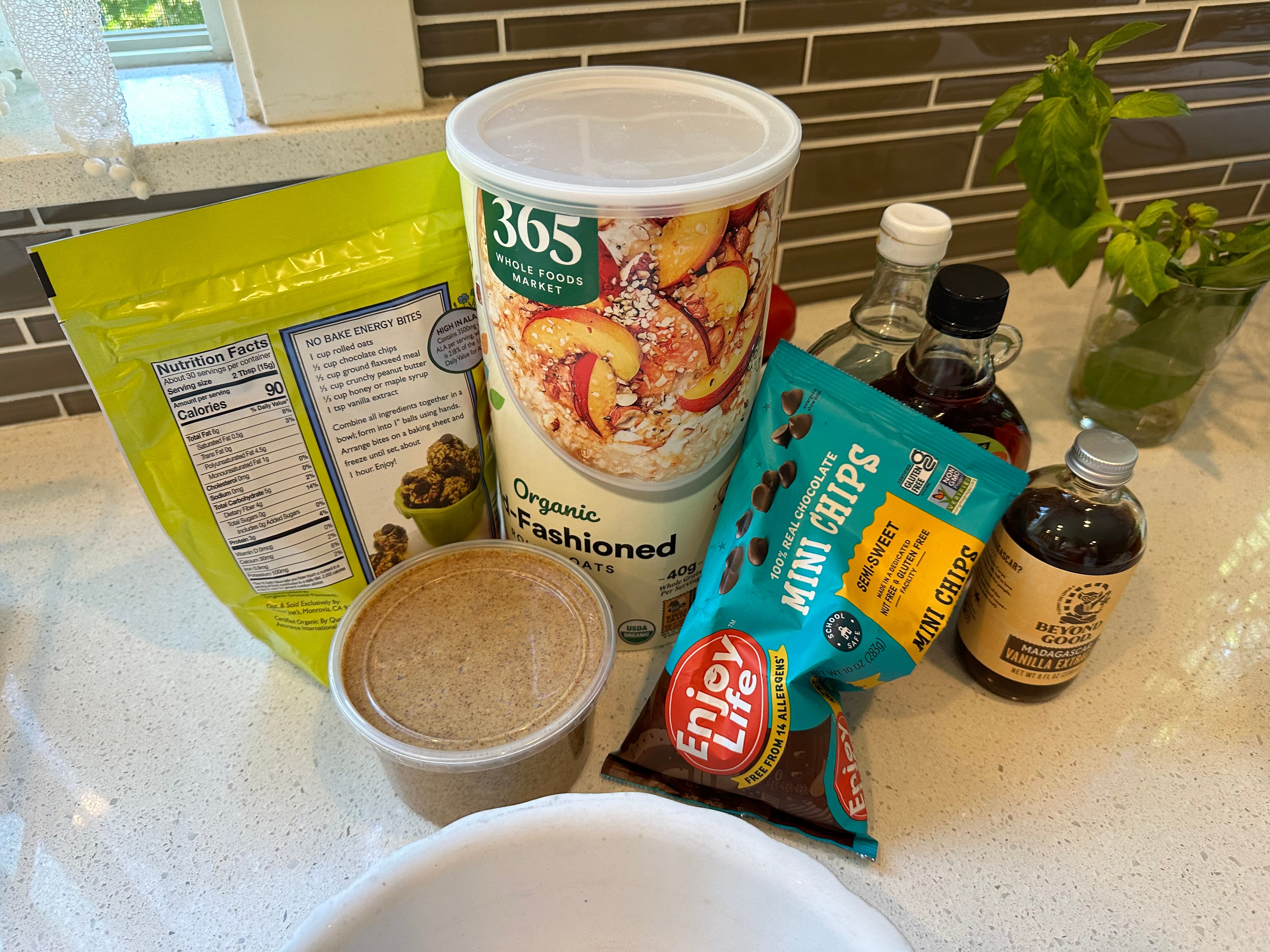
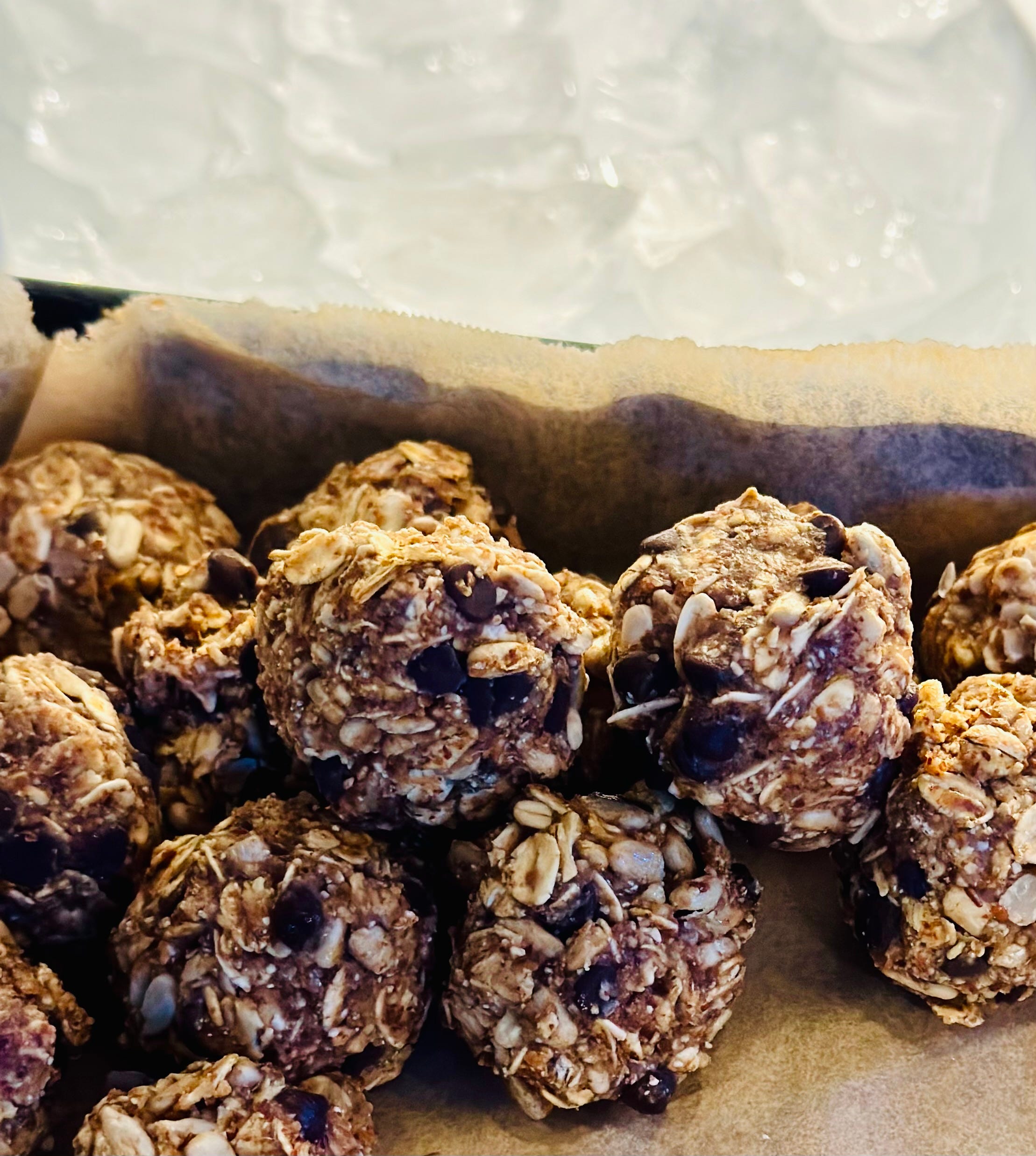
energy balls!!
Energy Balls
1c rolled oats
1/3 - 1/2c mini chocolate chips, because why not?
1/2c ground flax meal
1/2c almond butter (or any nut butter you prefer)
1/3c sunflower seeds, toasted and salted
1/4c maple syrup (more or less depending upon your sweet tooth)
1t vanilla
Put all the ingredients in a bowl and mix like crazy. Using wet hands, roll them into small balls, about 1 - 2 inches. Crucial that you FREEZE them. And then, eat as needed!
I have a favor to ask? Please, can you heart this post? If you’re reading this in email, simply click the link to the post and hit the heart. It helps me find new readers. Thank you!
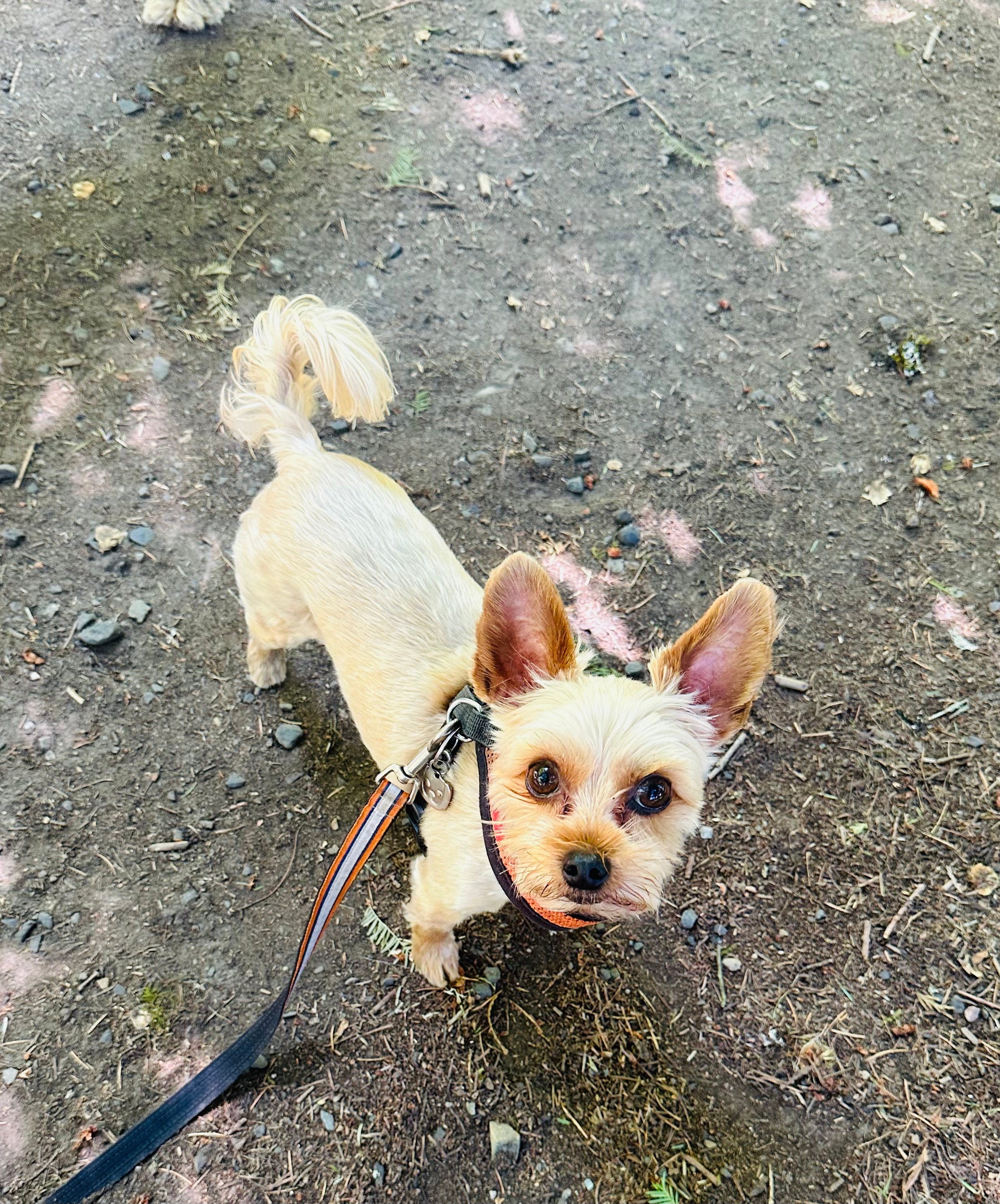
Stanley with his summer cut:
If you find yourself regularly reading and enjoying my work and you’d like to show some thanks, you can do so with this charming button:
If you aren’t ready to hop on, yet you wish to send a little love my way:
…
Thanks for being here with me.
Tell your people you love them, and take care of your skin!

PS:
In case you missed it, here are a couple recent missives:


And, to stay in the loop:
“Make the mass murderer a great diaper changer.” 👏👏👏
I have a framed print of that Botero painting. I hung it in my dining room for a long time as subtle social commentary for people eating at my table. I wanted her comfort with her body to remind people that eating is human, social, communal, joyous, and not to be done in shame and hiding. Some people were put off by her nakedness, by the suggestion of the bathroom as private space mixing with dining in my house. The best people got it and found comfort in it.